
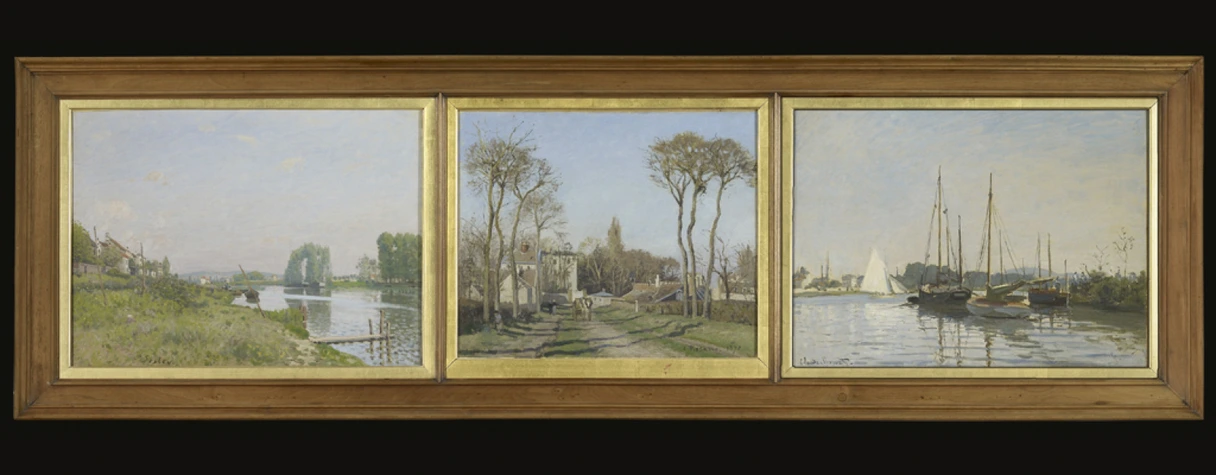
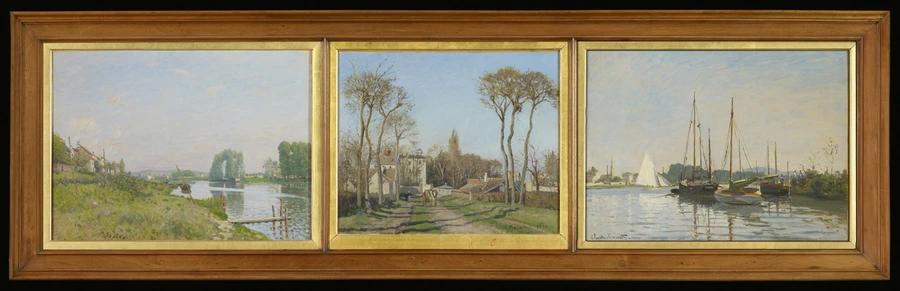
From left to right : Alfred Sisley (1839-1899) L'Ile Saint-Denis, 1872 ; Camille Pissarro (1830-1903), Entrée du village de Voisins, 1872 ; Claude Monet (1840-1926), Bateaux de plaisance, entre 1872 et 1873.
Presented from August 29, 2023
Level -2
Domenica Walter, widow of art dealer and collector Paul Guillaume, consecutively acquired during the 1950s, a landscape by Alfred Sisley - Chemin de Montbuisson à Louveciennes - then one by Claude Monet - Argenteuil -, both in the museum’s collection today. Reflecting her own taste for impressionism, her purchases ever so slightly shifted her husband’s original selection.
Both landscapes, adjoined with exceptional loans from the musée d’Orsay, attest to the transformation of the Parisian countryside at the beginning of the 1870s: the road and rail activity on the Seine’s bridges or the marina harbors which become leisure destinations for the city residents. Painters’ newfound interest for landscape is evident from the first Impressionist exhibition in 1874. It consecrates what critics called « the outdoors school » – the practice of painting outside, in front of the subject.
Claude Monet, Camille Pissarro, Alfred Sisley, Auguste Renoir, Paul Cézanne all display familiar landscapes, which split from the idealized nature from academic painting. The artists are committed to represent their own sensibility of nature, « in any season, right under the sky ceiling » (Théodore Duret). The quick brushstrokes, the bright colors, the importance of the sky, shadows and reflections, are all shift from the traditional rules of the genre and allow a new consideration to these daily landscapes.